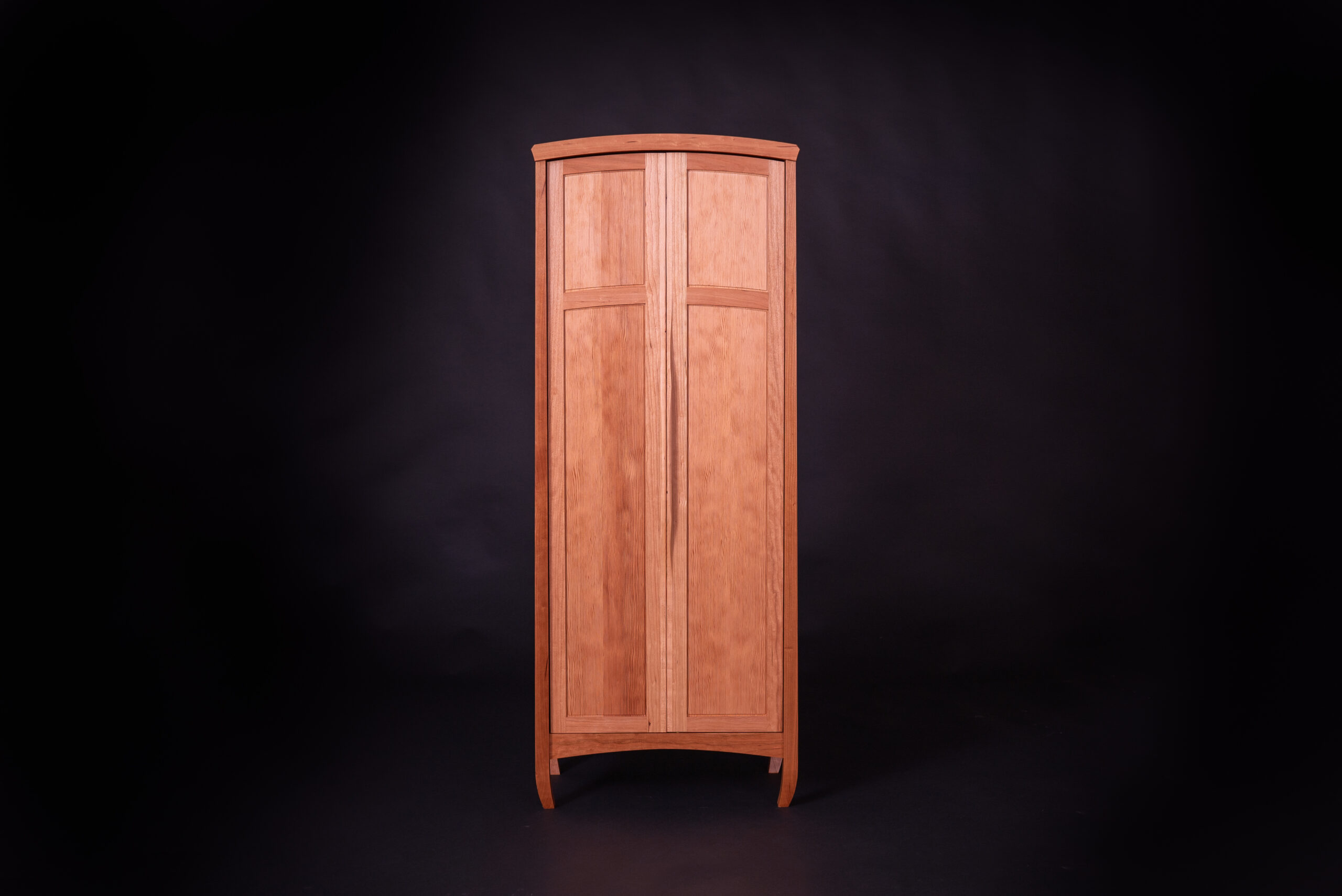
Understanding Custom Furniture Pricing
If you’re considering commissioning a piece of custom furniture, one of the first questions you’re probably asking is:
How much is this going to cost?
The honest answer is that custom furniture can vary considerably in price. A small side table and a large dining table could actually be the same price despite the difference in size if the complexity is very different. Furniture of a similar size could have a vastly different price if the amount of design, material, fabrication, finishing, and hands-on work involved are different.
At Waldo Furniture Co., I design and build one-of-a-kind furniture for clients throughout Austin and Central Texas. Every piece starts with the specific needs, ideas, and space of the client rather than a catalog or production model.
Custom furniture occupies an interesting space between design, craft, and art. A well made piece has to function without fail, but it can also become an important visual element in a room. It is a piece of functional artwork that can be enjoyed every day and potentially passed down for generations.
In this guide, I’ll explain what goes into the cost of custom furniture and why a handmade piece of furniture can take considerably more time and work than a piece of factory-produced furniture.
What Does Custom Furniture Cost?
As a very rough planning guideline, custom furniture at Waldo Furniture Co. typically falls in the range of $350-$650 per square foot. This is not a formal pricing formula. The final price of a piece depends on its size, materials, design complexity, joinery, hardware, finishing, and the amount of individual fabrication required.
Unlike cabinetry, where linear-foot pricing can sometimes provide a useful starting point for budgeting, furniture is much harder to reduce to a simple measurement. A small, highly complex piece can require considerably more work per square foot than a large, relatively simple table.
For that reason, I use the square-foot range as a general planning tool rather than a way to calculate an exact price.
Typical Custom Furniture Price Ranges
Here are some examples of what you might expect to invest in different types of custom furniture:
Furniture Type | Typical Price Range |
Dining / Game / Kitchen Tables | $6,000–$12,000+ |
Coffee Tables | $3,500–$7,500 |
Side / End Tables | $1,500–$3,500 |
Dining Chairs | $1,000–$3,500 each |
Lounge Chairs | $3,500–$7,500+ |
Benches | $2,500–$5,000 |
Desks | $5,000–$10,000+ |
Credenzas / Sideboards | $6,000–$12,000+ |
Media / Record Cabinets | $5,000–$10,000+ |
Beds / Headboards | $6,000–$12,000+ |
Bookcases / Shelving | $3,500–$8,000+ |
Specialty Furniture | $5,000–$15,000+ |
These ranges are intended as general planning guidelines, not fixed prices. A highly complex commission can fall outside these ranges in either direction depending on the design and requirements.
Why Does Custom Furniture Cost More?
Custom furniture isn’t simply a more expensive version of something you could buy at a furniture store.
The fundamental difference is that you’re commissioning the design and construction of a unique object that has never been made before. There is no existing plan, there isn’t a factory making thousands of identical copies, it is one-of-a-kind.
All that means more time is spent making decisions about proportions, materials, construction, ergonomics, joinery, hardware, finish, and details.
1. Every Piece Starts With a Design
One of the biggest differences between custom furniture and buying something from a furniture store is that the design doesn’t already exist.
When you commission a piece from Waldo Furniture Co., we’re starting with an idea rather than selecting a product from a catalog. It could be as simple as:
“I need a dining table that seats eight people and matches this room’s aesthetic.”
Or it might be much more specific:
“I want a piece of furniture that stores my vinyl collection, houses my vintage audio equipment, provides ventilation, and looks like it was made in the 60s.”
From there, I work through dimensions, proportions, materials, joinery, hardware, storage, ergonomics, and aesthetics to develop a piece that is unique to the project. The more individualized the design, the more time is required before a board is ever cut.
2. Custom Furniture Takes Time
The timeline can be one of the biggest differences between custom furniture and custom cabinetry. This isn’t because cabinetry is simple. Good custom cabinetry involves substantial design, engineering, fabrication, finishing, and installation. The difference is that furniture tends to concentrate that work into a single, highly individualized object.
A custom furniture project can involve:
- Initial consultation
- Concept development
- Preliminary drawings
- Revised drawings
- 3D modeling
- Material selection
- Detailed design
- Material preparation
- Milling
- Joinery
- Shaping
- Assembly
- Extensive sanding
- Finishing
- Final assembly
- Delivery
Some pieces can move through this process relatively quickly. More complex projects can take many weeks or months from the initial conversation to the finished piece. The timeline depends on both the complexity of the furniture and the other projects already scheduled in the shop. I would rather give a project the time it needs than rush a piece simply to meet an arbitrary deadline.
3. One-of-a-Kind Design Requires More Hands-On Work
Custom furniture is often made up of dozens or hundreds of individual decisions and operations.
A piece may require curved components, custom joinery, bookmatched panels, bent laminations, hand-shaped details, veneered panels, carefully fitted hardware, or other techniques that aren’t practical to automate.
Even when a machine is used, there is still a significant amount of hands-on work involved in preparing, fitting, assembling, and refining the parts. The goal isn’t simply to make something that looks different, it’s to design and build something that is beautiful and meets your specific needs.
4. Furniture Often Uses More Hardwood
Custom cabinetry and custom furniture both use a wide variety of materials, and plywood can be an excellent choice for either.
In cabinetry, plywood is often an ideal material for cabinet boxes because it is inexpensive, strong, stable, efficient to work with, and can provide an excellent foundation for a high-quality finished product.
Furniture is different because much more of the material is often made with solid hardwood.
A dining table might be built almost entirely from solid hardwood. A chair may depend on carefully selected grain orientation for both appearance and strength. A cabinet or credenza might combine solid hardwood, veneer, and plywood in different parts of the same piece.
At Waldo Furniture Co., I carefully select the lumber for each project based on color, grain, figure, dimensions, and how the boards will work together as a finished piece and how to accommodate expansion and contraction. For some projects, the selection of the wood is an important part of the design itself.
5. The Wood Itself Can Become Part of the Design
One of the advantages of working with solid hardwood is the ability to design around the natural characteristics of the material. Bookmatching, grain matching, radial matching, figure, knots, color variation, and changes in grain direction can all become part of the finished design.
A piece of furniture isn’t simply a collection of boards. The way those boards relate to one another can become one of the most important elements of the design. That is particularly true when working with highly figured hardwoods or carefully matched veneer. Selecting, milling, orienting, and preparing that material takes time, but it is one of the things that makes handmade furniture so special.
6. Joinery and Construction
A piece of custom furniture has to be structurally sound while also looking good from nearly every angle. That can require considerable attention to detail, joinery and construction.
Depending on the design, I may use:
- Mortise-and-tenon joints
- Bridle joints
- Dovetail joints
- Bent laminations
- Veneering
- Bookmatching or Radial matching
- Curved and shaped components
- Traditional woodworking techniques
- Custom mechanical connections
The construction method is determined by the design and the requirements of the piece. I don’t believe in adding complicated joinery simply to make a project more complicated. The construction should support the design, durability, and function of the furniture.
7. Hardware and Specialized Features
Custom furniture can also incorporate hardware and functionality that isn’t available in standard furniture.
Depending on the project, that might include:
- Custom drawer hardware
- Soft-close undermount slides
- Hand-cut wood drawers
- Specialty hinges
- Game Vault
- Integrated lighting
- Magnetic attachment systems
- Hidden storage
- Custom doors
- Custom metalwork
- Specialized audio equipment storage
- Custom organizers
These features require additional design and fabrication, but they can transform a piece of furniture from something that simply looks good into something that is specifically designed around how you use it.
8. Finishing Is Part of the Furniture-Making Process
The finish is one of the most important parts of a piece of furniture.
A beautifully designed piece can be undermined by a poor finish, while a good finish can dramatically enhance the appearance and feel of the wood. Depending on the project, finishing may involve extensive sanding, stain or dye, multiple coats of finish, rubbing or polishing, and careful attention to the final sheen and tactile quality.
At Waldo Furniture Co., I lean towards oil-based hand rubbed finishes. These are durable, bring out the depth of grain and provide a great semi-glass sheen.
9. Why Does Custom Furniture Take So Long?
The short answer is:
Because nearly everything is being done for the first time.
With mass-produced furniture, a manufacturer may build thousands of identical pieces using established processes, fixtures, tooling, and production lines. A custom furniture maker doesn’t have that luxury. Even when I build a design I’ve made before, every client, piece of lumber, room, and set of requirements is different.
The first part of a design requires solving problems that a production manufacturer has already solved. That’s part of what you’re paying for when you commission custom furniture: not simply the physical materials, but the design thinking, problem solving, craftsmanship, and time required to turn an idea into a unique finished object.
Is Custom Furniture Worth the Investment?
Custom furniture isn’t the right choice for everyone.
If you’re looking for the fastest or least expensive way to furnish a room, there are many excellent manufactured furniture options available.
Custom furniture makes more sense when you’re looking for something that:
- Matches a specific space
- Designed to be a particular size
- Performs a specific function
- Uses particular materials
- Has a specific aesthetic
- Incorporates unusual features
- Doesn’t exist as a manufactured product
- Is intended to last for decades or generations
- Has personal meaning beyond its basic function
For me, the goal isn’t to make a piece of furniture more expensive simply because it is custom. The goal is to create something that couldn’t have been purchased anywhere else.
A well designed and carefully constructed piece of furniture can become more than something you use every day. It can become a piece of functional artwork, something that contributes to the character of a room, reflects the person who commissioned it, and can potentially be enjoyed by future generations.
What Should You Have Ready Before Starting a Custom Furniture Project?
You don’t need a finished design before contacting me, just an idea.
However, It can be helpful to have:
- Approximate dimensions
- Photos of the space it will live
- An idea of how you want to use the furniture
- Examples of furniture or design styles you like
- Preferred wood species, if you have one
- Any special features or functions you need
- Your approximate budget
- Your desired timeline
The more information you can provide, the easier it is for me to understand what you’re looking for. But part of my job is helping you figure out the rest.
What Happens After You Contact Waldo Furniture Co.?
Custom furniture projects typically begin with a phone call about what you’re looking for.From there, I’ll learn more about the space and its style, how you intend to use the piece, your aesthetic preferences, and your budget.
I’ll then develop a preliminary concept sketch. For more involved projects, a detailed 3D model may be needed so we can work through the design before fabrication begins.
Once the design is approved and the project is scheduled, I’ll source and prepare the materials, build the piece in my Austin shop, coordinate finishing, and deliver the finished furniture.
For larger or more complex projects, I’ll keep you updated with photographs throughout the build so you can see the piece come together.
Planning a Custom Furniture Project in Austin?
If you have an idea for a piece of furniture that you can’t find anywhere else, I’d love to hear about it. Whether you have a complete design in mind or simply know that you need something specific for your home, we can start by talking about what you’re trying to accomplish.
Send me some photos of the space, approximate dimensions, information about how you plan to use the furniture, and your approximate budget. I’ll help you determine what makes sense for the project and whether Waldo Furniture Co. is the right fit for what you’re looking for.